Introduction
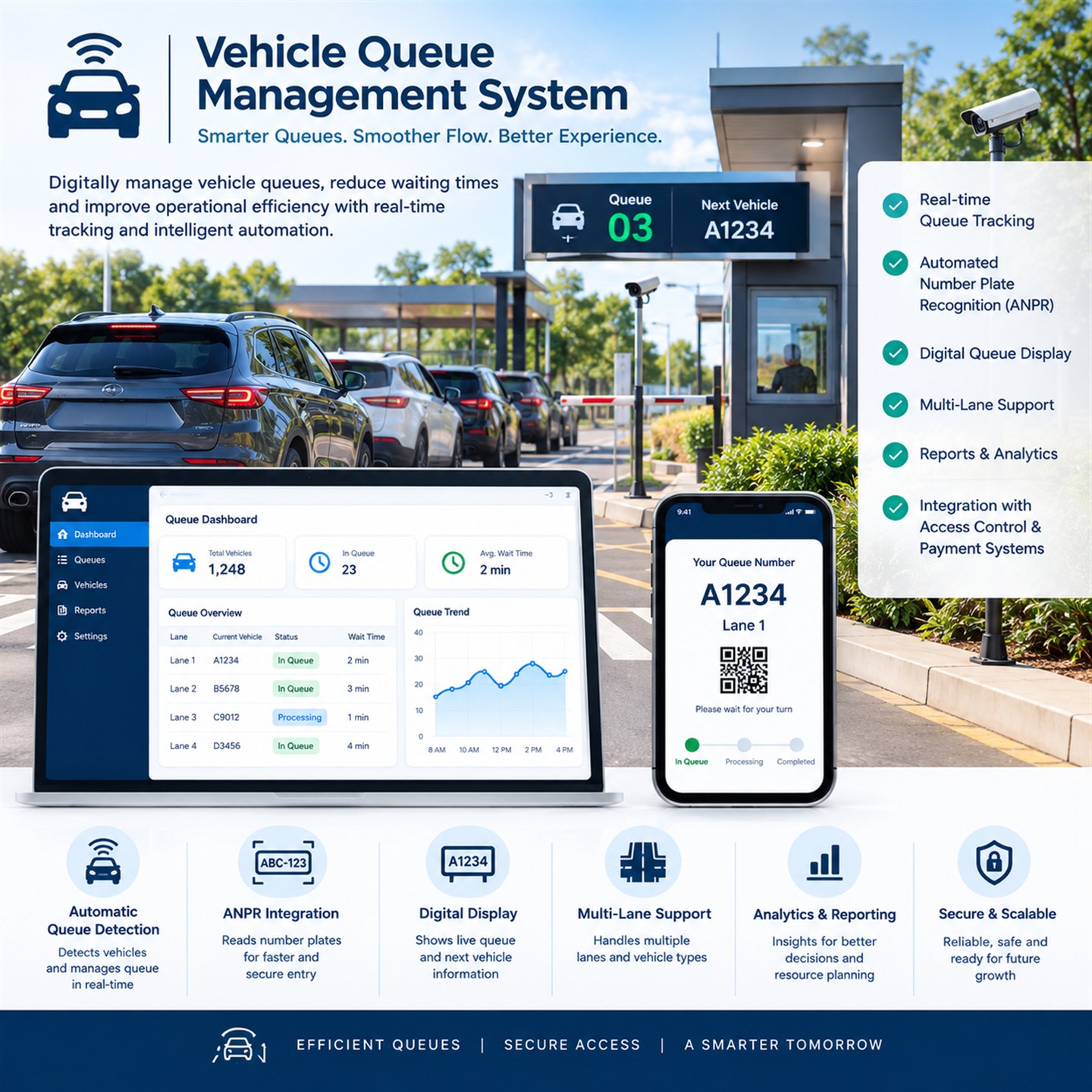
VQMS is a Vehicle Queue Management System built to manage vehicle movement, parking capacity and warehouse loading operations within an industrial facility operated by a sister company. It automated manual processes such as warehouse and chute availability checks, vehicle quality checks, starting and ending loading, and loading delay tracking — combining web, mobile and hardware-integrated components to monitor and manage vehicle movement, loading operations and access throughout the premises.
Problem
Vehicle queuing, warehouse and chute availability, and loading activity were managed through manual, paper-based processes, making it difficult to track vehicle status in real time or coordinate loading efficiently. Lorries and containers with no positioning logic risked obstructing internal routes, vehicle quality checks and loading delays went untracked, and loaded capacities had to be recorded manually, leaving the facility without a digital, end-to-end view of vehicle and warehouse activity.
Solution
VQMS was built using C#, .NET, ASP.NET, XAML, DevExpress, AJAX, LINQ and SQL Server, combining web and mobile applications with hardware-integrated identification. RFID readers, cameras and facial-recognition systems were integrated with the application for vehicle and person identification, monitoring and access-related workflows, capturing and processing identification and operational data in real time. Vehicle queue and positioning logic manages lorries and containers to keep movement efficient and prevent vehicles from obstructing internal routes, while warehouse operations are supported by coordinating loading points based on orders and tracking loaded capacities using handheld and mobile devices. Database-driven workflows track vehicle status, movement, loading activities and operational information end-to-end, replacing manual paperwork with digitally captured data.
Technologies and Tools:
👉 Application Development: C#, .NET, ASP.NET, XAML, DevExpress, AJAX, LINQ
👉 Database: SQL Server
👉 Mobile/Handheld: Windows Phone
👉 Hardware Integration: RFID readers, cameras, facial-recognition systems
Process
To ensure the successful delivery of VQMS within a live industrial facility, we followed a structured, iterative development process.
Requirements & Design:👉 Operational Analysis: Analyzed existing manual processes for warehouse and chute availability, vehicle quality checks and loading to identify where automation would have the most impact.
👉 Iterative Development: Delivered the web, mobile and hardware-integrated components incrementally, validating each workflow against real operational conditions.
👉 Application Development: Built the web and mobile applications and the underlying database-driven workflows on C#, .NET, ASP.NET and SQL Server.
👉 Hardware Testing: Conducted integration, testing and troubleshooting of software and connected hardware components (RFID, cameras, facial recognition) in an industrial environment.
👉 Field Validation: Verified vehicle queue and positioning logic, and warehouse loading coordination, under live site conditions.
👉 Operations Collaboration: Worked with warehouse and operations teams to align the system with real vehicle, loading and access workflows on-site.
👉 Industrial Deployment: Supported deployment and production use of the system within the live industrial facility.
Key Functionalities
Vehicle & Person Identification:RFID readers, cameras and facial-recognition systems identify vehicles and people for monitoring and access-related workflows.
Vehicle Queue & Positioning:Manages the queue and positioning of lorries and containers to keep movement efficient and prevent vehicles from obstructing internal routes.
Warehouse & Chute Coordination:Coordinates loading points based on orders and tracks warehouse and chute availability for incoming vehicles.
Loading Capacity Tracking:Tracks loaded capacities and loading start/end activity using handheld and mobile devices on the warehouse floor.
Vehicle Quality Checks:Supports vehicle quality check workflows as part of the queuing and loading process.
Digital Operational Records:Database-driven workflows track vehicle status, movement, loading activities and loading delays, reducing manual paperwork by capturing operational data digitally.
Responsibilities
Application Development:👉 Core Development: Developed software using C#, .NET, ASP.NET, XAML, DevExpress, AJAX, LINQ and SQL Server.
👉 Web & Mobile Apps: Developed web and mobile applications for monitoring vehicle movement and operational activities within the facility.
👉 Device Integration: Developed and integrated hardware components including RFID readers, cameras and facial-recognition systems for vehicle/person identification, monitoring and access-related workflows.
👉 Data Capture: Integrated hardware devices with the application to capture and process identification and operational data.
👉 Queue & Positioning: Implemented vehicle queue and positioning logic for lorries and containers, ensuring efficient movement and preventing vehicles from obstructing internal routes.
👉 Warehouse Coordination: Supported warehouse operations by coordinating loading points based on orders and tracking loaded capacities using handheld/mobile devices.
👉 Workflow Tracking: Implemented database-driven workflows for tracking vehicle status, movement, loading activities and operational information.
👉 Paperless Operations: Reduced manual paperwork by enabling operational data to be captured digitally through handheld devices.
👉 Integration & Troubleshooting: Worked on integration, testing and troubleshooting of software and connected hardware components in an industrial environment.
👉 Operational Automation: Automated manual processes including warehouse & chute availability, vehicle quality checks, starting & ending loading and loading delay tracking for a sister company's industrial facility.
👉 Reduced Paperwork: Replaced manual, paper-based tracking with digitally captured operational data across the facility.